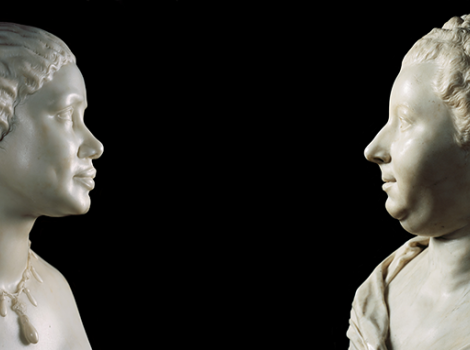
Patti Smith discusses her National Book Award-winning memoir Just Kidsthis Saturday, 2pm at the National Portrait Gallery.
In 1967, the twenty-three-year-old Patti Smith left her aimless life in southern New Jersey to try her luck in New York City. Seeking what, exactly? A job? A job in the arts? Something tangible? Perhaps. But more a sense of transcendent liberation and self-expression fueled by her sense that, ultimately, she would make her own way in the world.
It turned out she quickly found a soul mate to help make this journey. Arriving at a friend’s apartment, she viewed a beautiful man with a faun-like head, asleep. She lost track of this youth but then found him again, and he introduced himself.
“My name is Bob.” “Bob,” I said, really looking at him for the first time. “Somehow you don’t seem like a Bob to me. Is it okay if I call you Robert?”
It was Robert Mapplethorpe, another artistic scuffler in the city, another visionary convinced of his own ultimate success.
Patti Smith tells the story of her relationship with Mapplethorpe against the backdrop of the 1970s and 1980s in her affecting and lovely memoir, Just Kids. It recently won the National Book Award for nonfiction. During the 1970s Smith established herself as a poet, artist, rocker, and all-around American troubadour in the tradition of Walt Whitman; her career is ongoing today. Mapplethorpe, in his wholehearted belief of Smith, was essential to her career and sense of self. She reciprocated that belief, and they remained close even after Mapplethorpe finished the long process of coming out as a gay man.
Smith writes in a brief afterword to Just Kids that she always intended “one day to write our story,” and this is the fulfillment of that promise. The book begins and ends with his final days, dying of AIDS in 1989. In the first scene, Smith listens to his labored breathing over the phone on the night he passed away. At the end, she tells about the last time they spoke and his falling asleep: “So my last image was as the first. A sleeping youth cloaked in light, who opened his eyes with a smile of recognition for someone had never been a stranger.” When word came of Mapplethorpe’s death, Smith played Puccini’s aria “Vissi d’arte” from Tosca: I have lived for love, I have lived for Art. Just Kids shows how great art comes from great love.
The Teen Ambassadors will conclude their summer programming this week with the final five performances of “Portraits Alive!” As with previous years, program coordinator Geri Provost-Lyons has been immensely pleased with the program results. Provost-Lyons states, "It has been an awesome summer. As the students perform over time, their work gets better and better. Some visitors have returned to view the performances a second time, and we have also enjoyed the tremendous support of many former Teen Ambassadors—the program's alumni."
The visitor experience has been a positive one also. One patron commented, “What a fun program, not just for the audience but for the students who participate. These actors embraced their characters and made me want to know more about them. I hope I’m in the D.C. area next summer to see it again.” Another visitor said, “What a wonderful program! The kids obviously worked very hard and deserve some special recognition. I applaud the museum for sponsoring this.”
“Portraits Alive!” will be presented each afternoon at 2:15 at the National Portrait Gallery with a final performance scheduled for Friday, August 13. Admission is free.
Beginning on Wednesday, July 28, the portraits of the National Portrait Gallery come to life with "Portraits Alive!" performances.
For the fourth summer, the National Portrait Gallery is proud to host the Teen Ambassadors, a group of Washington, D.C., high school students selected to perform as various NPG portrait sitters. The Teen Ambassadors spend several weeks in research and writing after choosing the person they wish to portray. Beginning this week, they will deliver their monologues in front of their respective chosen sitter. Individual performances are three to five minutes, and the collective experience usually lasts slightly over an hour.
"Each of these young people brings something special with them; while some of them are performers, others are writers, and this opportunity allows them to explore and develop talents that will augment their existing passions," observes Geri Provost-Lyons, NPG’s Youth and Family Coordinator and director of the Teen Ambassador program. Provost-Lyons adds, "We are fortunate in that we have so many gifted young people who commit themselves completely and professionally to present these vignettes. They truly craft excellent work."
The 2010 Teen Ambassadors, preparing for their "Portraits Alive!" performances. The students spend several weeks in research and writing.
L-R: Geri Provost-Lyons, director of the Teen Ambassador Program; Molly Katchpole, Smithsonian Katzenberger Art History Intern; and Erica Joyce, NPG intern.
On Friday, May 7, the National Portrait Gallery is hosting a book-signing with author and former First Lady Rosalynn Carter.
Carter brought a new way of thinking about the first lady’s role to the White House: she left the décor as it was; she wore an inaugural gown that she already worn; and she expanded the traditional role of her staff to also fulfill her own campaign promise to guide legislation on behalf of the mentally ill—a cause that she continues to advocate. Modeling herself after Eleanor Roosevelt, as first lady she recognized and brought to the nation’s attention that the presidential spouse’s role is a key factor in fulfilling presidential duties.
On Friday, May 7, she will discuss and then autograph her latest book Within Our Reach: Ending the Mental Health Crisis in the Robert and Arlene Kogod Courtyard from noon to 1:30 p.m.
Within Our Reach is an insightful, unsparing assessment of the state of mental health care that uses stories from Carter’s thirty-five years of advocacy to discuss the larger issues at hand. In it, Carter crafts an intimate and powerful account of a subject previously shrouded in stigma and shadow, surveying the dimensions of an issue that has affected everyone. Those who would like to attend may preorder copies of Within Our Reach by calling the museum store at (202) 633-5451 from 11:30 a.m. to 7:00 p.m. daily. Books maybe picked up after April 27. Positions in the signing line will be determined by the number on cash-register receipts. For more information, see the NPG events calendar.
Rosalynn and Jimmy Carter / Ansel Adams / Polaroid Polacolor print, 1979 / National Portrait Gallery, Smithsonian Institution; gift of Mr. and Mrs. James Earl Carter, Jr.
Top image:Rosalynn Carter / Wilford Harewood/The Carter Center / Atlanta, Ga., U.S.A.
The “Portraits Alive! Lost and Found” tour offers an innovative journey that breathes life into the people featured in paintings, prints, and photographs in the National Portrait Gallery. See the museum’s 2009 Teen Ambassadors perform brief biographical narratives featuring such well-known people as Rudolph Valentino, Lena Horne, Juliette Gordon Low, and Angela Davis.
The dramatic interpretations are written and performed by students from Washington-area high schools who have participated in the Portrait Gallery’s eight-week youth program that fuses the disciplines of history and theater.
To see the students’ impressive work, take the "Portraits Alive!" museum tour. Remaining dates are Tuesday, August 11 through Friday, August 14. Each tour begins at 2:15 p.m.; meet in the museum’s F Street Lobby. R
Read more about "Portraits Alive!" in this article from Smithsonian Magazine's Around the Mall blog.
As the nation celebrates the bicentennial of Abraham Lincoln’s birth, leading Lincoln scholar Harold Holzer delves into one of the most unusual and deeply revealing portraits of the sixteenth president. Holzer will speak at the museum on Saturday, April 18, as part of the American Pictures Distinguished Lecture Series, made possible though a pioneering partnership among Washington College, the National Portrait Gallery, and the Smithsonian American Art Museum. Holzer’s talk will explore this 1860 portrait of Abraham Lincoln by John Henry Brown.
Holzer is author or editor of thirty-one books on Lincoln and the Civil War era. He has received numerous awards, including the 2005 Lincoln Prize, the most prestigious award in the field, for his book Lincoln at Cooper Union (2004), and he was a 2008 recipient of the National Humanities Medal. His latest work is the critically praised Lincoln, President-Elect: Abraham Lincoln and the Great Secession Writer, 1860–1861 (2008). Currently, Holzer is senior vice president of external affairs at the Metropolitan Museum of Art and co-chairman of the United States Lincoln Bicentennial Commission.
John Brown’s portrait of Lincoln is on display in “One Life: The Mask of Lincoln.” This exhibition at the National Portrait Gallery shows the changing face that Abraham Lincoln presented to the world as he led the fight for the Union. The exhibition runs until July 5, 2009. It is part of a yearlong Smithsonian-wide celebration of the bicentennial, exploring the life and times of the nation’s most mythic and transformative president.
The lecture takes place in the museums’ Nan Tucker McEvoy Auditorium and begins at 4:30 p.m., with doors opening at 4:00 p.m. It is free and open to the public; tickets will be released at 3:30 p.m. at the G Street lobby information desk on a first-come, first-served basis. Limit of two tickets per person. More information is available here.
The American Pictures Distinguished Lecture Series will conclude on Sunday, April 26, with a talk by internationally recognized New Yorker cartoonist Roz Chast. She will explore Charles Addams’s famous cartoon Boiling Oil (1946). More information on the series is available on the website of the C. V. Starr Center.
Abraham Lincoln / John Henry Brown, 1860 / Watercolor on ivory / National Portrait Gallery, Smithsonian Institution
Visit the museum on Saturday, March 21, and see a lecture by iconic filmmaker John Waters as part of the American Pictures Distinguished Lecture Series. His talk will explore Letter of Resignation by the great abstract expressionist Cy Twombly. The series is made possible though a pioneering partnership among Washington College, the National Portrait Gallery, and the Smithsonian American Art Museum.
The event takes place in the museums’ Nan Tucker McEvoy Auditorium, and begins at 4:30 pm, with doors opening at 4 p.m. It is free and open to the public; tickets will be released at 3:30 pm at the G Street lobby information desk on a first-come, first-served basis. Limit of two tickets per person. More information is available here.
This 1995 portrait of John Waters is part of the National Portrait Gallery’s collections. Painted by his neighbor Joseph Sheppard, the portrait shows Waters seated in front of the Italian poster made for Desperate Living, which depicts two of the movie’s stars, Jean Hill (left), and Mink Stole.
Waters, dubbed the “pope of trash,” draws the subject matter for his outrageous, shocking, often X-rated films—including Mondo Trasho (1969), Pink Flamingos (1972), and Desperate Living (1977)—from life in his native Baltimore. Their offbeat and earthy grittiness has influenced many other filmmakers. Waters says he purposely stooped low for the sake of “shock humor,” which he described as “making people laugh at things they would never laugh at if it were real.” However, in a surprising turn of events, his 1988 film Hairspray received a PG rating and then became a prize-winning Broadway musical.
The American Pictures Distinguished Lecture Series will continue with lectures by critically acclaimed novelist Jamaica Kincaid; internationally recognized New Yorker cartoonist Roz Chast; and leading Lincoln scholar Harold Holzer. Kincaid will discuss the painting Kept In (1889) by Edward Lamson Henry on Saturday, April 11. Holzer will examine John Henry Brown’s portrait of Abraham Lincoln (1860) on Saturday, April 18. The 2009 series concludes on Sunday, April 26, with Chast’s exploration of Charles Addams’s famous cartoon Boiling Oil (1946). More information on the series is available on the website of the C. V. Starr Center.
On this day, the 200th birthday of Abraham Lincoln, many comments will be made about President Lincoln’s greatness. Of all the deeds attributed to him, however, the most enduring is simply this: Abraham Lincoln saved the United States.
Although there are four faces on Mount Rushmore, perhaps only George Washington has such a legacy and such mythical status as Abraham Lincoln. On and around the Washington Mall, there are tributes to many presidents and heroes, but Lincoln and Washington are commemorated here in the highest order with President Washington’s monument at the pinnacle of America’s most famous public green, while President Lincoln’s memorial anchors the mall’s western-most point, providing the foreground for the dramatic sunset over the Potomac.
The word iconic has become a platitude in our language, so much so, that lesser figures of celebrity and notoriety have been called icons and the abuse of the word has deflated its meaning. However, Abraham Lincoln is truly an American icon. He is on our penny and our five-dollar bill. Cities are named after Lincoln as is the most famous bedroom in the home of American presidents. Universities are named after him and the notion of a log cabin upbringing immediately brings to mind the humble beginnings of our sixteenth president. Without Abraham Lincoln, Lincoln Logs would just be sticks. Oh, and he saved the United States. Happy 200th birthday, President Lincoln.
Lincoln Symposium, Monday, February 16
To help celebrate Lincoln's birthday, the National Portrait Gallery is hosting a scholarly symposium this Monday, February 16. Produced in conjunction with NPG’s exhibition “One Life: The Mask of Lincoln,” the program will consist of four lectures that will examine various aspects of Lincoln and his times.
The speakers and topics are David C. Ward, the exhibition curator on “‘Vaulting Ambition’: Lincoln’s Self-Fashioning,” Alexander Nemerov on “The Flame of Lincoln,” Michael E. McGerr on “The Embarrassment of Lincoln’s Nationalism” and Marcia Brennan on “Tragic Dreams and Spectral Doubles: The Metaphysical Lincoln.”
The symposium is Monday, February 16, from 9am to noon, in the museum’s Nan Tucker McEvoy Auditorium. Information on visiting the museum is available here. The symposium is free and open to the public.
Listen to historian David Ward discuss the upcoming Lincoln symposium (5:38)
For more on Lincoln, be sure to see to the online exhibition for “One Life: The Mask of Lincoln.” The exhibition is part of a yearlong Smithsonian-wide celebration of the bicentennial, exploring the life and times of the nation's most mythic and transformative president.
Abraham Lincoln / Alexander Gardner, 1865 / Albumen silver print / National Portrait Gallery, Smithsonian Institution
Good Night, and Good Luck (2005) Friday, October 3, 7:00 p.m. David Strathairn stars as the newsman Edward R. Murrow in this dramatization of Murrow’s 1954 showdown with Senator Joseph McCarthy. Directed by George Clooney, Good Night, and Good Luck was nominated for six Oscars. American University history professor Robert Griffith will introduce the film.
The Maltese Falcon (1941) Wednesday, October 8, 7:00 p.m. Based on the 1930 Dashiell Hammett novel, this 1941 film noir stars Humphrey Bogart as detective Sam Spade, who must cut through a web of deceit, greed, and murder to obtain a priceless statuette of a falcon. The Maltese Falcon marks John Huston’s directorial debut. Historian David Ward of the Portrait Gallery will introduce the film
On the Waterfront (1954) Wednesday, October 15, 7:00 p.m. Marlon Brando and Eva Marie Saint star in this 1954 drama about violence and corruption on the docks of New York. On the Waterfront is directed by Elia Kazan and scored by Leonard Bernstein. The film won eight Academy Awards, including best picture, best actor, and best director. Portrait Gallery senior historian Sidney Hart will introduce the film.
All screenings are located in the museum’s Nan Tucker McEvoy Auditorium. They are free and open to the public; no tickets are required. Doors open at 6:30; seating is first come, first served. More information on NPG's events page.
Portraits of Edward R. Murrow, Joseph McCarthy, Dashiell Hammett, and Marlon Brando are on view now at the National Portrait Gallery. You can learn about these figures and their portraits as part of the regular Thursday-evening Face-to-Face portrait talks this month.
Joseph McCarthy, Roy M Cohn, Ralph Flanders (cropped)/Unidentified Artist,1954/Gelatin silver print/National Portrait Gallery, Smithsonian Institution
Come to the National Portrait Gallery and see the 2008 Portraits Alive! Teen Ambassadors breathe life into portraits of Martha Graham, Coretta Scott King, Charlie Chaplin, Buster Keaton, Rita Hayworth, Jean Grae (above), and other notable American figures.
These students from Washington–area high schools signed up to work with NPG educators to learn about museum careers and museum theater. In this ten-week-long program, each student chose a work from the Portrait Gallery’s collection, performed historical research on the sitter, wrote a script, and perfected a solo performance featuring that sitter. To see the students’ impressive work, take the Portraits Alive! museum tour. Remaining dates are Tuesday, August 19, through Thursday, August 21, at 2:15 p.m., and Friday, August 22, at 1:00 p.m. Meet in the museum’s F Street Lobby.
In this blog post, we focus on Martha Graham, as interpreted by Lauren Walker, a rising sophomore at Duke Ellington School of the Arts. She performs alongside a 1938 portrait of Martha Graham on view in the NPG exhibition “Bravo!” Below is the script that Walker wrote for her performance:
As Martha Graham (passages in quotations are from Graham’s autobiography Blood Memory):
“I am a dancer.” Unlike most dancers, I don’t live in order to dance; I dance in order to live. Dance is life and without life there is death. My name is Martha Graham, and as you know, I am a dancer. Although simpler in its meaning but yet complex in its expression, I am a mover. Ever since I was a child, I have always been fascinated with movement and the way humans use their bodies to express how they feel. This fascination of movement and the human body I got from my father; he was a physician who worked with the human nervous system. The one thing he used to tell me that directly related to his profession was that “movement never lies.”
I was born and spent half of my life in a town in Pennsylvania called Allegheny. The portion of my life that I spent there was completely bland and colorless. It was so overly religious in its attitudes that dancing was seen as a sin. So in 1909, when my family and I moved to Santa Barbara, California, it felt as if I had escaped from the harsh regulations of Allegheny. In Santa Barbara, there were no rules against dancing or free expression. In Santa Barbara I felt free for the first time in my life.
I had a fascination with dancing and the body because “the instrument through which dance speaks is also the instrument through which life is lived.” The body is a vessel and it should be treated with care and respect. I had such a tremendous fascination, that it was no surprise I started a dance company in 1926. This was very important for me because I could now achieve much more than I ever could by working for someone.
I received inspiration for my choreography from everything, but I received most of it from my ancestral roots and sharp, angular movements.
Please join us on Thursday, July 24, for a series of hip hop themed events at the National Portrait Gallery in celebration of the exhibition "RECOGNIZE! Hip Hop and Contemporary Portraiture." WKYS (93.9) FM's DJ EZ Street starts spinning tunes in the Kogod Courtyard at 2pm, and a cash bar opens at 5pm. At 7pm there will be a free screening of DJ Spooky’s film New York is Now, featuring a discussion with the artist moderated by Martin Irvine immediately following. More information on the event is available here.
The night also includes a 6pm Face-to-Face talk by guest co-curator Jobyl A. Boone, about Kehinde Wiley’s portrait of Ice-T (shown at right) in “RECOGNIZE!.” This portrait is part of a group of portraits originally commissioned from Wiley as part of VH1’s 2005 Hip Hop Honors awards show. The exhibition features four of the six VH1 Hip Hop Honors awardees from that year, as well as two other recent portraits by the artist.
In February, NPG curator Brandon Fortune had the opportunity to sit down with Kehinde Wiley, and ask him some questions. You can listen to the complete interview, and see more portraits by Kehinde Wiley here.
KW: I completed the Hip Hop Honors body of work in 2005, and that commission came as a bit of a different part of my practice. Generally what I try to do with my practice is to find models from the street—complete strangers who don’t necessarily fall into that typical portrait sitting-set. Which is to say that most of the great portraits from the past that I really admire in paintings have to do with people who are very powerful and wealthy, and who use the portrait as a very important social occasion of having their picture put down in time.
In my work I’m actually taking very chance moments, and turning that into a heroic moment—taking possibly the complete opposite of what those original works were based on, and turning an entire lifetime of power and dominance in world in on its face, and actually taking an entire moment of absolute chance and making that the big picture.
When I was invited to do the Hip Hop Honors paintings, it was opportunity to move almost in a different direction, but I think in the same direction in some really crucial ways. By using the language of portraiture and the way that has evolved over time, into how to describe someone heroic and how to describe someone powerful—and then taking possibly the most celebrated individuals in black American popular culture—I’m allowing the language of heroicism to then be drawn in that idiom.
BF: How has the culture of hip hop impacted you and your art?
KW: The culture of hip hop is something that ‘s impossible ultimately to define. I recently have been doing a number of trips to in some ways take the cultural temperature of black American presence through out the world. And you see it responded to in places like Brazil—in places like West Africa, Turkey, China, India, Thailand—all of which I’ve spent time this summer simply going through and asking these sorts of questions surrounding black American culture and its presence in the world.
And what I have seen, so increasingly, is that black American culture is as varied globally as it is right here at home. And so when I try to create a response to a question around what hip hop is, and how it fits into my personal practice, it’s global. And that’s one of the reasons why you see my shows having characters of all corners of the globe.
I’m embracing the fullness of a culture that began as political act, an act of reformation and confirmation of who we are in the world—in the South Bronx, in the 70s. And now its gone on so successfully that you’ll be in the streets of Tokyo and Dakar and see elements of that reverberated.
BF: What’s next for you on the exhibition schedule? Could you share that with us?
KW: This coming fall, and this summer actually, I’ll be launching the first of my West Africa paintings. I’ve created a new series of paintings that has me traveling across the world, looking at world culture, youth culture—a demographic between the ages of 18 – 35. A very specific group that’s consumed with American consumption, that’s consumed with the fabrication of American popular culture, that’s consumed with the absence of painting as a dominate language within popular culture.
And what I’m trying to do is to go to places like Dakar in Senegal, places like Lagos in Nigeria. Increasingly, I’m looking at models within that demographic and asking them to choose their favorite moments art-historically, to have them monumentalized in paintings. That show opens this summer at the Studio Museum in Harlem.
AREK/Tim Conlon and Dave Hupp, 2007/Montana spray paint on Sintra panel/Tim Conlon and Dave Hupp
The political cartoons of Herbert Lawrence Block (1909–2001), who was known by the pen name “Herblock,” appeared in American newspapers for more than seventy years. His particular interest in depicting American presidents is featured in the National Portrait Gallery’s new exhibition “Herblock’s Presidents: ‘Puncturing Pomposity.’”
The upcoming event, “Curator’s Conversation: Herblock: Drawn from Memory,” will focus on the life and work of one of the nation’s greatest political cartoonists. NPG senior historian Sid Hart will lead a conversation with three Pulitzer Prize winners: reporter Haynes Johnson, historian Roger Wilkins, and cartoonist Tony Auth. No reservations are required; seating is first come, first served. This event takes place at NPG’s Nan Tucker McEvoy Auditorium on Friday, June 27, at 7:00 p.m. More information is available here.
In this blog post, Sid Hart, curator of the exhibition, discusses one of the pieces, a cartoon Herblock drew of Nixon, published in the Washington Post on October 24, 1973 (shown above):
Events in the Watergate crisis moved so rapidly and dramatically on the weekend of October 19–21 that Herblock drew two cartoons to cover them. Tape recordings made in the Oval Office were the object of a jurisdictional struggle involving Congress, Special Prosecutor Archibald Cox, and the White House. The tapes might determine if President Nixon was complicit in the 1972 break-in of Democratic headquarters in the Watergate complex, and whether he had interfered with the FBI’s investigation of this crime. Nixon argued that the tapes were protected by executive privilege and national security; the U.S. Circuit Court of Appeals rejected his claims but preferred that the parties reach an accommodation.
On October 19, Nixon agreed to give Congress a personally written summary of the tapes relating to Watergate, and give unlimited access to Senator John Stennis (D-MS), who would verify the accuracy of the summaries. Nixon ordered Cox fired, but the attorney general and his deputy resigned rather than carry out the charge. Instead, Nixon had the solicitor general fire Cox, and the whole affair was known as the “Saturday-night massacre.”
Herblock used this cartoon to bring back one of his most powerful graphic metaphors—the bloodhound that had been tracking Nixon since 1954—to illustrate that Nixon’s offering would not satisfy justice. The bones Nixon tossed to the dog represent his aides who had been forced to resign.
Dog Day Afternoon (1975), directed by Sidney Lumet and starring Al Pacino, is based on a 1972 bank robbery that had captured media attention at the time. Pacino’s performance as Sonny Wortzik, an unemployed Vietnam veteran, earned him his fourth Oscar nomination in consecutive years and the Best Actor award. His energetic portrayal of Sonny, critic Gene Siskel said, “made me believe the unbelievable.”
The poster for this film is on view in NPG’s new exhibition “Ballyhoo! Posters as Portraiture.” In the poster, Al Pacino’s likeness looms large over a gathered crowd of police officers, FBI men, and other onlookers. Pacino did seem larger than life at the time. Portraying complex characters with a subtlety and intensity few others could match in such films as The Godfather, Serpico, and The Godfather II, he was the prototypic male star of the 1970s, bringing a sense of tough realism to his roles.
A conversation with One in Ten executive director Margaret Murray follows the free screening.
This film is part of NPG’s Reel Portraits film series. Doors open at 6:30 p.m., film begins at 7:00 p.m.; seating is first come, first served. Screenings and lectures for this series are all located in the Nan Tucker McEvoy Auditorium at the Donald W. Reynolds Center for American Art and Portraiture. More information is available here.
Zaida Ben-Yusuf (1869–1933) was a leading New York portrait photographer who attracted to her studio the important writers, artists, politicians, and actors of the period. On Sunday, June 22, at 2:00 p.m., the National Portrait Gallery’s associate curator of photographs, Frank Goodyear, will give a tour of the NPG exhibition “Zaida Ben-Yusuf: New York Photographer.” After the tour, he will sign copies of the book that accompanies the exhibition. Meet at the exhibition's entrance on the 2nd floor; more information on the event is available here.
In this blog post, Goodyear discusses Ben Yusuf’s 1898 self-portrait that hangs in the exhibition:
One of the signature works in the new exhibition “Zaida Ben-Yusuf: New York Portrait Photographer” is an 1898 self-portrait. Although Ben-Yusuf was principally a commercial photographer who attracted to her studio the leading cultural and political figures of the day, the subject she photographed most often was herself. During her career, she created no less than ten self-portraits, each different from the other in terms of dress, pose, and mood.
Turning the camera on herself provided an opportunity to experiment with both the art of portraiture and her own feminine persona. These self-portraits gave the British-born photographer—a young single woman recently settled in New York City—a much-needed identity, one that would lessen her sense of displacement and attract attention to her art.
Rendered in a narrow vertical format, this image is striking for the costume Ben-Yusuf wears and the pose she adopts. Both mark her as a bohemian woman. Unlike more conventional dresses of the period, Ben-Yusuf’s long gown is strikingly form-fitting. Her dark coat and hat are equally modern in fashion, and the manner in which she arranges her long necklace and holds her fur muff at her side suggests a desire to push forward—if not to break free from—stylistic traditions. This likeness makes clear how conscious Ben-Yusuf was of her public appearance and how deliberate she was in casting herself among those women who looked to transgress traditional boundaries of femininity.
Reviewers greeted her photographs with enthusiasm. In Alfred Stieglitz’s Camera Notes, critic William Murray singled out this self-portrait for praise. It was Ben-Yusuf, though, as much as the portrait itself that prompted Murray to comment that the subject “appears before us scintillating with all the qualities of mind and person represented by the much abused French word—chic.”
Twenty-eight years old when this portrait was created, Ben-Yusuf was indeed coming into her own as an independent woman and a fine art photographer. This self-portrait acts to announce her arrival in the New York art world and anticipates her engagement with the many subjects who would visit her studio in the years ahead.
In January of 1945 a new documentary, The Fighting Lady: A Drama of the Pacific, was released to the American public. Immediately popular, it was ultimately awarded the 1945 Oscar for Best Documentary and a 1946 New York Film Critics Circle Special Award.
Produced by the Naval Aviation Photographic Unit under Commander Edward J. Steichen, The Fighting Lady was filmed primarily by a group of motion-picture cameramen headed by Lieutenant Commander Dwight Long, USNR. Although Steichen was primarily a still photographer, he was listed as the director since he was the commander of the unit. The Fighting Lady is the only motion picture he ever directed. Learn more about Edward Steichen in the National Portrait Gallery's exhibition "Edward Steichen Portraits," on view until September 1, 2008.
Steichen had served as a lieutenant colonel in the U.S. Air Service during World War I, and came out of that war as a pioneer in the field of aerial photo interpretation. In 1942, at the age of 62, he was considered by virtually everyone to be too old for further active service.
But Rear Admiral Arthur W. Radford, one of the Navy’s pioneer aviators, wanted to document the new warship of the Navy—the fast aircraft carrier—in action. The battleship, long the queen of the fleet, was being quickly usurped by this extremely flexible newcomer.
Specifically, Radford wanted dramatic action photos of the Navy’s carrier operations for use in publicizing this new form of warfare and attracting new recruits into its ranks. Steichen, as one of the foremost photographers of the time, could very well be the one to deliver them.
So with a medical waiver for his age in hand, Steichen became Lieutenant Commander Edward J. Steichen, USNR, and one of the most noted combat photographers of World War II.
The Fighting Lady gave wartime audiences, for the first time, a dramatic “you are there” look at the daily life on one of the new fast Essex-class fleet carriers then attacking Japanese installations all over the Pacific. The current PBS documentary Carrier is a direct descendant of this landmark documentary.
See The Fighting Lady and discuss the film with Jack Green of the Naval Historical Center on Friday, May 30, at 7:00 p.m. in the McEvoy Auditorium at the National Portrait Gallery, Donald W. Reynolds Center for American Art and Portraiture. The event is FREE and open to the public.
On Monday night, May 12, the National Portrait Gallery's Cultures in Motion program will present Hepburn Herself, a stage presentation produced by NPG’s Jewell Robinson and featuring DC actress Helen Hedman as Katharine Hepburn. The first performance in March was viewed by almost three hundred people and included a discussion afterwards with Robinson, Hedman, director Michael Kramer, and writer and adapter Warren Perry. This Monday’s show will also conclude with a production discussion.
Among the superlatives Katharine Hepburn claims are the four Academy Awards which are on display in the National Portrait Gallery’s “One Life” exhibition "KATE: A Centennial Celebration." Miss Hepburn had a total of twelve nominations over her career, and many critics believe she also deserved Oscars for her unforgettable performances in The Philadelphia Story and The African Queen. Her story begins with the beginning of Hollywood and concludes with curtains drawing over the most celebrated career in cinema history.
A partial list of actors with whom she appeared is a roll call of the greatest actors in the history of film: Jimmy Stewart, Cary Grant, John Wayne, Humphrey Bogart, John Barrymore, Peter O’Toole, Laurence Olivier, Sidney Poitier, and, of course, Spencer Tracy. That all the arts contain legions of adults who operate their lives like pretentious children is a certainty; Kate Hepburn did not suffer such behavior, and she was, per biographer Charles Higham, “disgusted by the tawdry ostentation of Hollywood.”
Katharine Hepburn was both gutsy and vocal. She performed a stunt which involved falling into the dirty Venice canal waters during the filming of Summertime; this resulted in a case of conjunctivitis which never left her. Once from the stage during a performance she lectured an audience member who dared to take a flash picture. Another time, she hit a truck driver for revving his engine behind the theatre.
It is lucky for her admirers that she took the time to write two autobiographical works. The most sensitive subjects in her life- the death of her brother Tom and her love for Spencer Tracy- we discover about her through her own words. Her large number of biographers far exceeds the number of interviews she granted; throughout her days, she liked being liked, but she treasured her privacy. It is that quality which most keenly separates her from today’s starlets, as she felt a great dignity about keeping her passions, friendships, and family to herself, and it is precisely that dignity which is, perhaps, the most outstanding of her superlatives.
Photograph by Nekisha Durrett
Monday’s performance is free, but seating is limited. For reservations please call 202-633-8520 or email NPGPublicPrograms@si.edu. Additional info on the performance is available here.
April is Jazz Appreciation Month! To help celebrate, Reuben Jackson, archivist at the National Museum of American History, will discuss Thelonious Monk and his portrait at NPG on April 17 from 6:00 to 6:30 p.m. Meet in the F Street lobby, and we will then walk to Monk’s portrait. For information on getting to the National Portrait Gallery please see our visit page.
This talk is just one of NPG’s Face-to-Face portrait talks that occur every Thursday. If you can’t attend the discussion, you can view Monk’s portrait on your own, in the “Bravo” exhibition on the third floor mezzanine.
Pianist/composer/bandleader Thelonious Monk was one of our greatest philosophers. His compositions (classics such as “Pannonica” and the alternately lyrical and pensive “Monk’s Mood,” among others) are aural canvases pulsing with humor, depth, beauty, and originality.
Monk’s writing and his still-undervalued
pianistic prowess personify a line from poet Patti Smith: “the sea of possibilities” This is where the best of hip hop and the world of Thelonious Monk intersect. At its best, hip hop is a pretension-free multitasker—part drummer, part messenger, and not afraid to address the alpha and omega of existence. (Visit NPG’s “RECOGNIZE! Hip Hop and Contemporary Portraiture” exhibition for more on hip hop)
Then, of course, there are the sartorial and linguistic connections. The so-called “be-boppers” (the 52nd Street crew!)—of which Monk was considered a part, were as known for their “hip” vernacular and clothing as, say, The Wu Tang Clan. But what, if anything, does a hat, a smoke-filled room, or a pair of Reeboks, tell us about someone’s art?
—Reuben Jackson
Thelonious Sphere Monk/Boris Chaliapin, 1964/Oil on canvas/National Portrait Gallery, gift of Time magazine
Recent Comments